
Crafting the Perfect Running Shoe Collection for All Your Workouts
Ever feel like you're wearing the wrong shoes for your run? Like you're slogging through mud when you should be floating on air? That's because one shoe simply can't do it all. Building a rotation of running shoes, each tailored to a specific type of run, can significantly improve your comfort, performance, and even reduce your risk of injury. Think of it like having a golf club for every shot – the right tool for the job!
Why Rotate Your Running Shoes?
Okay, so maybe you're thinking, "This sounds expensive. And complicated." But hear me out. Rotating your shoes isn't just about being a gearhead; it's about taking care of your body and maximizing your training. Here’s why it’s a game changer:
- Impact Reduction: Different shoes absorb impact in different ways. Varying the cushioning and support changes the stress on your joints and muscles, giving your body a chance to recover and adapt.
- Injury Prevention: Overuse injuries are common in running. Rotating shoes helps prevent repetitive stress on the same areas, reducing your risk of issues like shin splints, plantar fasciitis, and Achilles tendinitis.
- Performance Enhancement: A lightweight shoe will feel much faster during speedwork than a heavy, cushioned shoe. Choosing the right shoe for the workout allows you to perform at your best.
- Shoe Longevity: Alternating between pairs allows the midsole foam to fully recover its cushioning properties, extending the lifespan of each shoe. Plus, they air out and dry more thoroughly between runs.
- Enhanced Running Experience: Let's be honest, it's also just more fun! Trying out different shoes can help you discover what you like and find what works best for your unique running style.
The Core Shoes for Your Rotation
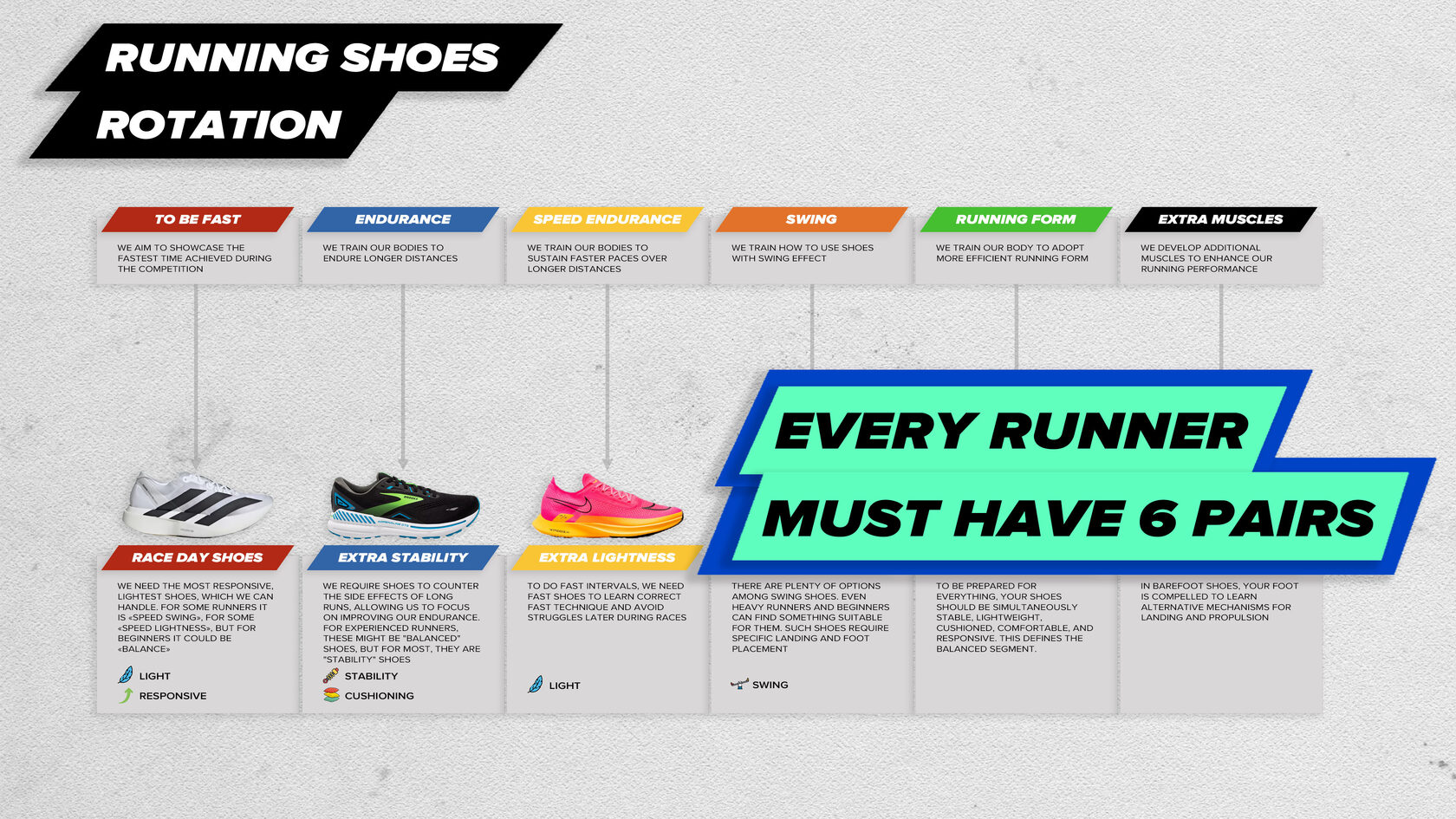
You don't need a closet full of shoes to start. A solid rotation can begin with just three key pairs:
- Daily Trainer: This is your workhorse. Your go-to shoe for the majority of your runs – easy miles, moderate efforts, and everything in between. It should offer a good balance of cushioning, support, and durability. Think of it as the reliable family sedan.
- Speedwork Shoe: Lighter and more responsive than your daily trainer, this shoe is designed for faster workouts like intervals, tempo runs, and races. It prioritizes energy return and a more aggressive feel. This is your sports car – built for speed.
- Long Run Shoe: Designed for comfort and protection over long distances. This shoe offers maximum cushioning and support to keep your legs feeling fresh even after many miles. Think of it as a comfortable SUV for those epic road trips.
How many miles should I put on my running shoes before replacing them?
A common question! A good rule of thumb is to replace your running shoes every 300-500 miles. However, this can vary depending on your weight, running style, and the type of shoe. Pay attention to the wear and tear on the outsole and the feel of the cushioning. If the shoe feels flat or less responsive, it's probably time for a new pair. I find keeping a training log helps me track mileage on each pair.
Choosing Your Shoes: Factors to Consider
Now that you know the types of shoes you need, here’s how to choose the right ones for you:
- Foot Type and Pronation: Understanding your foot type (neutral, overpronated, or underpronated) is crucial. Many running stores offer gait analysis to help you determine this. Knowing your pronation pattern will guide you towards shoes with the appropriate level of support.
- Running Surface: Are you mostly running on roads, trails, or a track? Road shoes are designed for hard, even surfaces, while trail shoes have more aggressive treads for grip on uneven terrain.
- Cushioning Preference: Do you prefer a plush, cushioned feel or a firmer, more responsive ride? This is largely a matter of personal preference. Experiment with different levels of cushioning to find what feels best for you.
- Fit: This is paramount! Make sure you have about a thumb's width of space between your longest toe and the end of the shoe. The shoe should feel snug but not tight, and your heel should be secure.
- Drop: This refers to the difference in height between the heel and the forefoot of the shoe. Lower drop shoes (0-4mm) encourage a more natural, midfoot strike, while higher drop shoes (8-12mm) can be beneficial for heel strikers. Experiment to see what feels most comfortable.
Expanding Your Rotation: Beyond the Basics
Once you have your core rotation established, you can consider adding specialized shoes to address specific needs or preferences:
- Trail Running Shoes: If you run on trails regularly, invest in a pair of trail shoes with aggressive lugs for traction, protection from rocks and roots, and a more durable upper.
- Recovery Shoes: These are designed for easy days and recovery runs. They typically feature maximum cushioning and a plush feel to help your legs recover after hard workouts. Some people even wear these just for walking around!
- Racing Flats: For serious racers looking to shave off every possible second, racing flats are the lightest and most minimalist shoes available. They offer very little cushioning or support, but they provide a direct and responsive feel for maximum speed.
- Stability Shoes: If you overpronate significantly, stability shoes can help control your foot motion and reduce your risk of injury. They typically feature medial posts or other technologies to provide extra support.
What's the difference between a stability shoe and a neutral shoe?
Great question! Neutral shoes are designed for runners with a neutral gait who don't require extra support. They allow the foot to move naturally through its range of motion. Stability shoes, on the other hand, are designed to control overpronation, which is when the foot rolls inward excessively. They often feature medial posts (firmer foam on the inside of the shoe) to provide extra support and prevent the foot from rolling too far inward.
Examples of Shoe Rotations
To give you a better idea of how this works in practice, here are a couple of example shoe rotations based on different running styles and needs:
Example 1: The Beginner Runner
- Daily Trainer: Brooks Ghost, Saucony Ride, or New Balance 880
- Long Run Shoe: Hoka Clifton or ASICS GEL-Nimbus
Note: A beginner runner might not need a separate speedwork shoe right away. They can use their daily trainer for all types of runs. As they progress, they can add a dedicated speedwork shoe.
Example 2: The Experienced Runner
- Daily Trainer: Saucony Kinvara, New Balance Rebel, or Brooks Launch
- Speedwork Shoe: Nike Zoom X Streakfly, ASICS Magic Speed, or Saucony Type A
- Long Run Shoe: Hoka Bondi, New Balance Fresh Foam More, or ASICS GEL-Kayano
- Trail Shoe (Optional): Salomon Speedcross or Altra Lone Peak
Example 3: The Budget-Conscious Runner
- Daily Trainer/Long Run: A versatile shoe like the Saucony Triumph or the Brooks Glycerin can handle both daily miles and longer efforts.
- Speedwork: Look for older models of speed-focused shoes that are often heavily discounted, or consider a less expensive racing flat.
Tips for Building Your Rotation
- Start Small: You don't need to buy all the shoes at once. Start with a daily trainer and gradually add other shoes as needed.
- Take Advantage of Sales: Look for sales and discounts, especially on older models. Running shoes can be expensive, so every little bit helps.
- Try Before You Buy: Visit a local running store and try on different shoes. Most stores will let you run on a treadmill or even outside to test them out.
- Listen to Your Body: Pay attention to how your body feels in each shoe. If a shoe is causing discomfort or pain, stop wearing it.
- Keep Track of Mileage: Use a running app or a simple notebook to track the mileage on each pair of shoes. This will help you know when it's time to replace them.
Where can I find good deals on running shoes?
There are several places to find deals! Check out online retailers like Running Warehouse, Amazon, and Zappos. Sign up for email newsletters from your favorite brands and running stores to be notified of sales and promotions. Also, consider visiting outlet stores or checking out end-of-season clearance racks at local running shops.
Building a running shoe rotation is an investment in your health and performance. It takes time and experimentation to find the perfect combination for your needs, but the benefits are well worth the effort. So, lace up those shoes, hit the road (or trail!), and discover the joy of running in the right gear.